Where to Eat 10 of Alberta’s Most Iconic Foods

Reading time: 7 minutes

To truly know a place, you have to eat its food. Be sure to try 10 of the most iconic foods in Alberta when you’re here and learn why they’re unique.

  • Enjoy Alberta-raised bison or beef at top chef-driven restaurants.
  • Get your hands dirty at a saskatoon berry U-pick farm.
  • Each ingredient tells a story of the people and land that make up Alberta.
See related articles

Alberta is a land of plenty when it comes to food. Farm and ranch culture is part of Alberta’s DNA, and we have the delicious goods to prove it.

The province is rich with everything from specialty breeds of pork to greenhouse tomatoes and cucumbers, but a few foods stand out above the rest. Our 10 most iconic foods, from bison and beef to mustard and saskatoon berries, represent ingredients that tell the story of who Albertans are through what we grow and eat.

“The most important part of about having all these great ingredients here is not only the fact that we have this land and we can grow it, but that we have a community that knows what to do with it,” says Karen Anderson, who has been running Alberta Food Tours for 20 years, with tours in Calgary, Edmonton, Banff and Canmore.

“When people come to eat here, when they go beyond to find the local chefs and businesses that use our local ingredients, they’re going to be blown away,” she says. “Alberta has a great food story.”

What are Alberta's most famous foods?

Alberta’s 10 iconic ingredients are bison, beef, canola, honey, saskatoon berries, Red Fife wheat, root vegetables, barley, mustard and pulses .

Embraced by chefs throughout the province, these signature ingredients pop up in casual fare, fine dining menus and everything in between.

Let your taste buds lead the way as you explore Alberta through our bounty of food.

Alberta has many places, like the Hartell Homestead, offering educational tours and classes about agriculture and sustainable farming.

How Alberta’s signature foods were chosen

Each of the 10 iconic foods was chosen for its connection to Indigenous cultures, Alberta’s landscape and farming industry or the immigrant populations that make up Alberta today. What each ingredient has in common is its prevalence throughout the province.

Alberta’s initial 7 Signature Foods came out of an international chef gathering called Cook It Raw, which visited Alberta in 2015. Top chefs from around the world teamed up with 15 chefs from Alberta to explore the possibilities of local ingredients. Each of the seven chef teams were assigned to explore—and cook with—an ingredient representative of Alberta’s bounty and culinary culture.

Calgary chef Liana Robberecht participated in the program as part of Team Canola. Sharing the virtues of one of her favourite local ingredients was deeply meaningful. “When we cook with these ingredients, we are expressing a sense of place," she says. "We're telling the story of the land, the seasons and the people behind the products.”

Now, Alberta Food Tours’ Karen Anderson has taken Cook it Raw’s concept and run with it. Through her guided food tours and Eat Alberta First cookbook, Anderson uses the signature ingredients as a framework to tell stories of Alberta’s chefs and producers. Anderson added barley, mustard and pulses to her working list of Alberta’s key foods. These humble ingredients reflect some of the province’s biggest crops and exports.

The wildlife park at Métis Crossing hosts a large herd of wood bison, plains bison and rare white bison. Visitors can join a wildlife tour for the chance to meet these majestic animals.

How to taste Alberta’s most iconic locally grown foods

Here is a rundown on all 10 foods and some of the places where you can eat them across Alberta.

Bison

Before European settlers arrived in Alberta, the plains were covered with roaming herds of bison (also known as buffalo). Sacred to Indigenous cultures, the bison once served as a major source of food and materials for shelter, clothing and tools. Alberta’s population of both wood bison and plains bison were nearly driven to extinction in the late 1800s. Now, wild bison are slowly being reintroduced to wild places like Elk Island National Park near Edmonton.

Today, over 450 Alberta ranches raise bison for food. Though it’s leaner and sweeter, bison can be used anywhere beef may be, such as in burgers, steaks, tacos and stews.

Where to eat bison dishes in Alberta

Get a taste at The Bison Restaurant and Terrace in Banff, where rich braised bison short ribs and dramatic bison tomahawk steaks are on the menu.

Edmonton’s RGE RD is also known for its bison, served in the restaurant or purchased from the adjacent butcher shop to cook at home.

See the majestic animals up close with a farm tour at select ranches like Glengary Bison 60 km (37 mi) north of Calgary in Rocky View County. Or, book a tour to see bison, elk and other animals at the Métis Crossing Wildlife Park.

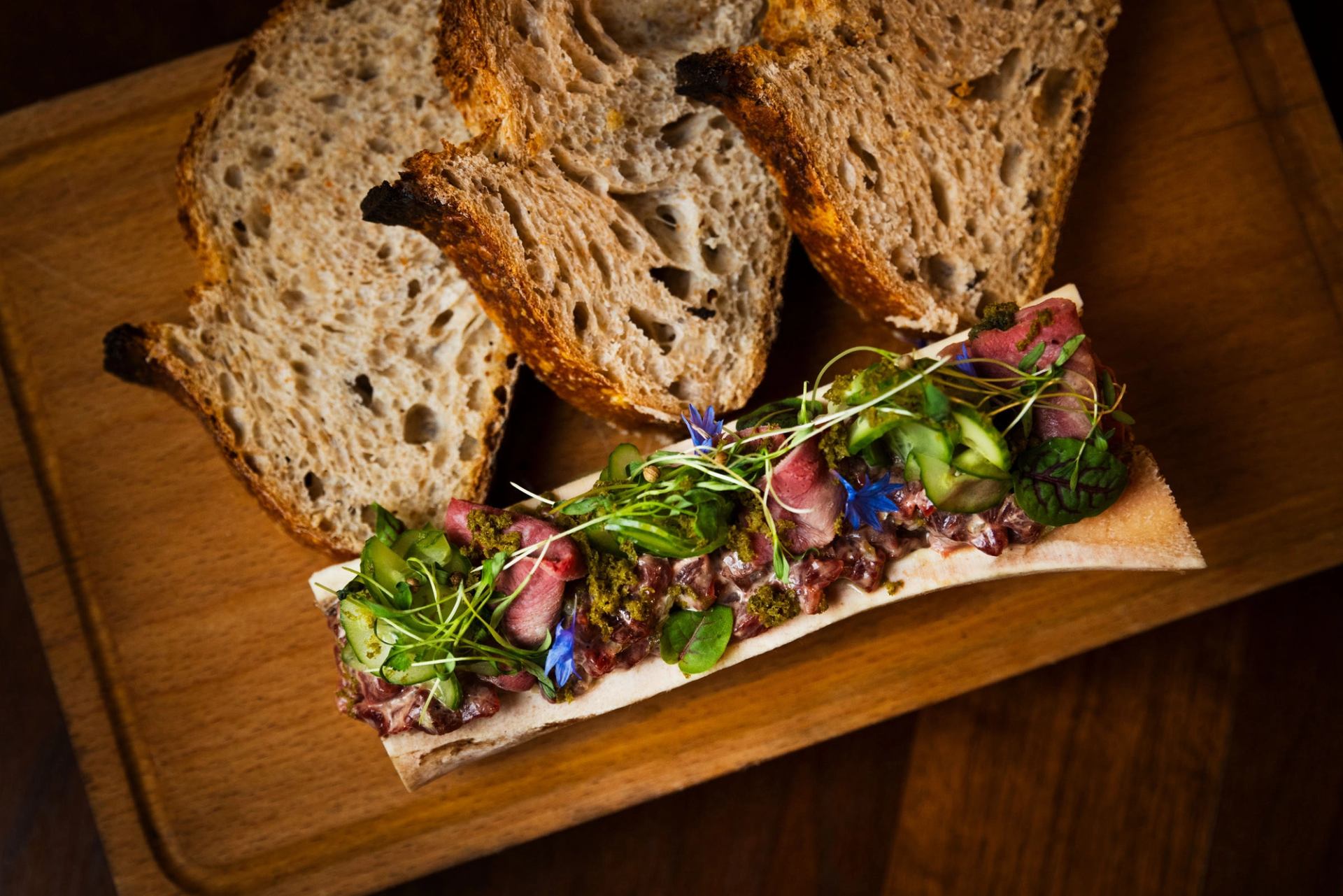
If you go to Edmonton’s RGE RD restaurant, be sure to try the beef bone marrow tartare—it’s delightfully rich and packed with vitamins and healthy fats.

Alberta Beef

Alberta quite famously raises some of the most phenomenal beef on the planet. Ranched in picturesque grassy hills and finished on barley and rye, Alberta beef is known for its ideal fat marbling, offering a mouth-watering rich flavour.

Where to eat Alberta beef

Calgary and Edmonton are stacked with excellent steakhouses, but one of the most famous in the province is in the village of Longview located 85 km (53 mi) from Calgary. Perched atop a sweeping vista of cowboy country, the Longview Steakhouse serves juicy steaks from cattle raised in nearby fields. Reservations can be hard to come by, so plan well in advance.

Craving a burger? Calgary is brimming with burgers of all shapes and sizes. Find thick and succulent burgers cooked to medium rare at True Wild Distillery.

For an award-winning smash-style burger, Class Clown Hamburgers serves up crispy patties made with fresh-ground Alberta pasture-raised beef.

Landscape shot of a canola field in Northern Alberta.
This plant is not only stunning to look at, but also heart-healthy. Canola has the lowest saturated fat content of all common culinary oils.

Canola

Venture into the Alberta prairies in the summertime and you’ll be met with yellow fields of sunny canola flowers as far as the eye can see. Canola seed is typically grown for its oil. A staple in Canadian homes, canola oil is prized for its neutral flavour, low saturated fat content and high smoke point.

“I have had a long love affair with the cold-pressed canola oil from Highwood Crossing,” chef Robberecht says, shouting out an organic grain product producer in High River. “I have gifted bottles to chefs around the world, introducing them to the beauty and quality of Alberta’s canola oil. It offers such a pure expression of our region.”

Where to taste canola oil in Alberta

Canola oil is typically used for cooking, but richer cold-pressed versions are used more like higher-end olive oils. Find canola oil served with vinegar and bread at Terra in Jasper, drizzled over soup at Rouge in Calgary or in a cocktail at Canmore’s Sauvage.

Rouge’s seasonal menu is made up of local ingredients—some they even grow themselves right outside the restaurant’s Inglewood neighbourhood location.

Honey

Bees buzz all around Alberta’s farmlands and natural areas. This creates roughly 13 to 18 million kg (30 to 40 million lbs) of honey every year, making us the largest honey producer in Canada.

Alberta honey tends to be light in colour thanks to bees feasting on canola or clover flowers. While most grocery store honey is blended from different sources, local producers often sell flower-specific varieties.

Where to try Alberta honey and mead

Head to an apiary like Christy Creek Honey in Lac La Biche, 211 km (131 mi) northeast of Edmonton, for a tour and to buy honey sourced from alfalfa, clover and dandelions.

A drinkable honey experience can be found at one of Alberta’s many meaderies. Mead is a wine-like drink created by fermenting honey and water. Give it a try at Fallentimber Meadery in Water Valley or Spirit Hills Flower Winery in Millarville.

Along with offering delicious saskatoon berries for U-pick every summer, the Saskatoon Farm has a restaurant, bakery, boutique, garden centre and an impressive farmers’ market.

Saskatoon berries

The saskatoon berry is not named after the city of Saskatoon in Saskatchewan. It’s actually the other way around. The word is derived from a Cree word for the berries, which are native to Alberta. Indigenous peoples have relied on them for generations, eating them fresh or drying them to make pemmican.

Saskatoons look much like blueberries, but are smaller, sweeter and more intense in flavour.

Where to try saskatoon berries in Alberta

Miners’ Café in Nordegg is famous for its seasonal saskatoon pies, baked into a flakey crust and served, if you choose, with a scoop of vanilla ice cream.

Experience the berry harvest firsthand at Saskatoon Farm, a picturesque 48 km (30 mi) drive south of Calgary. Summer is U-pick season (saskatoons are typically ready for a few precious weeks starting at the end of July), but the farm’s bakery, restaurant, farmers market and garden centre are open at various points throughout the year. With a small-town main street motif and cute animals to visit, there’s plenty of farm fun for the whole family.

Fresh-baked sourdough sitting on a cooling rack at an Alberta bakery.
Many Alberta bakeries and restaurants include locally grown Red Fife wheat in their sourdough recipes. The wheat provides a nuttier flavour than your run-of-the-mill flour.

Red Fife Wheat

Swaying fields of wheat line much of the Alberta prairie. While not as common as the standard Canadian Western Red Spring wheat, Red Fife makes the signature foods list. As the oldest successful wheat variety in Canada, most other Canadian wheat can be traced back to Red Fife. Today it’s used primarily in artisanal breads and is prized for its complex and nutty flavour.

Where to try Red Fife wheat in Alberta

Steps from the Bow River in Calgary’s East Village, Sidewalk Citizen Bakery uses organic Red Fife in its whole wheat sourdough bread. Pop in to buy a loaf and grab a snack at the bakery counter or lunch at the adjacent Charbar to take in other signature foods like Alberta beef and root vegetables.

For a sit-down restaurant experience, Calgary’s River Cafe is another Red Fife champion. Each table receives thick slices of red fife sourdough with a dab of house-churned butter as part of its complimentary bread service. And at Edmonton’s RGE RD, you’ll find it toasted and served alongside their pork liverwurst.

For a real taste of Alberta, you’ll want to visit the restaurants that use fresh, local ingredients. Root vegetables thrive in Alberta’s cooler summer nights.

Root Vegetables

You’re not dreaming: carrots, potatoes, beets, and turnips taste sweeter in Alberta. Our colder nights are the advantage here. As the veggies chill out underground at night, sugars have a chance to develop.

Road trip through Lethbridge County for a firsthand glimpse of the process. This is where you’ll find Canada’s Premier Food Corridor, where over 65 specialty crops grow on 900,000 Acres of irrigated land. This includes huge quantities of potatoes, which end up as French fries and potato chips for Cavendish Farms, McCain Foods and Frito-Lay.

Where to try elevated root vegetables in Alberta

Stop into a Lethbridge restaurant like Steel & Vines Wine Bistro to try dishes like potato gnocchi firsthand.

For some Indigenous inspiration, head up to Edmonton for a seasonally inspired meal at Bernadette’s. One of the restaurant’s signature dishes is a rotating version of chef Scott Iserhoff’s comforting house-made potato dumplings.

Alberta has over 170 distilleries and breweries across the province. Take time to stop in at Eau Claire Distillery in Diamond Valley, where you can join tours or visit their restaurant for a seasonal flight and delicious lunch.

Barley

Barley may seem like an old-fashioned ingredient, but it is essential to Albertan cuisine for a few reasons.

Barley is widely grown throughout Alberta’s farmlands. Yes, some of it does end up in hearty bowls of beef and barley soup, but it is also a key ingredient in whisky and beer, with much of our malted barley being exported around the world. Barley is also fed to cattle, giving Alberta beef its distinctive rich flavour and balanced fat marbling.

“Twelve million bottles of beer worldwide have Alberta barley in them. But there’s also the fact that our beef is finished on barley,” Anderson says. “Every feedlot in Alberta is finishing their cattle with barley.”

Where to try barley in Alberta

To drink Alberta barley, follow the Alberta Ale Trail to hit up breweries like Valley Brewing in Drumheller, Travois Ale Works in Medicine Hat, or Hawk Trail Brewery in Rimbey.

Alberta’s growing whisky scene also makes the most of our malt barley. Experience it at spots like Eau Claire Distillery in Diamond Valley, Wild Life Distillery in Canmore, or PARK Distillery in Banff.

Pick up a jar of mustard pickles or mustard beans if you stop by either of the Calgary Farmers’ Markets locations, open year-round.

Mustard

Alberta's farmlands are full of yellow flowered crops. Some are canola fields, but many are made up of bright mustard plants. Canada grows much of the world's mustard, with famous international brands like Maille Dijon even using Canadian (including Albertan) mustard seeds.

Yes, that yellow mustard on your hot dog was probably grown in Alberta. The province also boasts a small market of local craft mustards. Leading the pack is Brassica, a Calgary-based company known for its caviar-like whole grains.

Where to try local mustard in Alberta

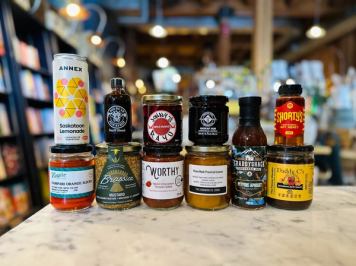
Cookbook Co. Cooks in Calgary carries several local varieties of mustard to bring home as a gift. The shop stocks several flavours of Brassica in various sizes as well as other local brands.

Local restaurants also serve Brassica mustards alongside cured meats. Find it at Calgary's beer-focused Rain Dog Bar in Inglewood as part of a gourmet charcuterie board.

In and around Lethbridge, you're bound to see Luco Farms' artisan mustards on offer. They have high-heat versions, sweet options and more to complement sandwiches, dressings and charcuterie boards.

Everything is made from scratch at the Kimchi House in Jasper National Park. Try an order of the Soon-Doo-Boo Jjigae, a hearty stew made with fresh veggies and your choice of meat. Look to curries, soups and stews for a healthy dose of pulses.

Pulses

What exactly is a "pulse?” The word may be unfamiliar, but people around the world eat pulses every day. “Pulse” refers to the dry seed of a legume plant. The category includes lentils, chickpeas and dry beans. Canada is the world’s largest exporter of pulses, with Alberta as the second-largest producer in the country after Saskatchewan.

The bulk of Alberta pulses are sent to other countries, but we also enjoy these protein-packed plant products here at home. From Indian curries to French Canadian split pea soups, pulses are embraced by Alberta’s multi-cultural population.

Where to try pulses in Alberta

Digging into Edmonton's South Asian restaurant scene is a great way to experience pulses. The South Indian Suvai Dosa’s offers a range of dosas made from ground lentils. Or try a flavour-packed chickpea-based channa masala from the elegant Guru.

Anderson also recommends heading to Calgary’s River Cafe on Prince's Island Park. The restaurant’s signature hummus specifically uses red Alberta lentils.