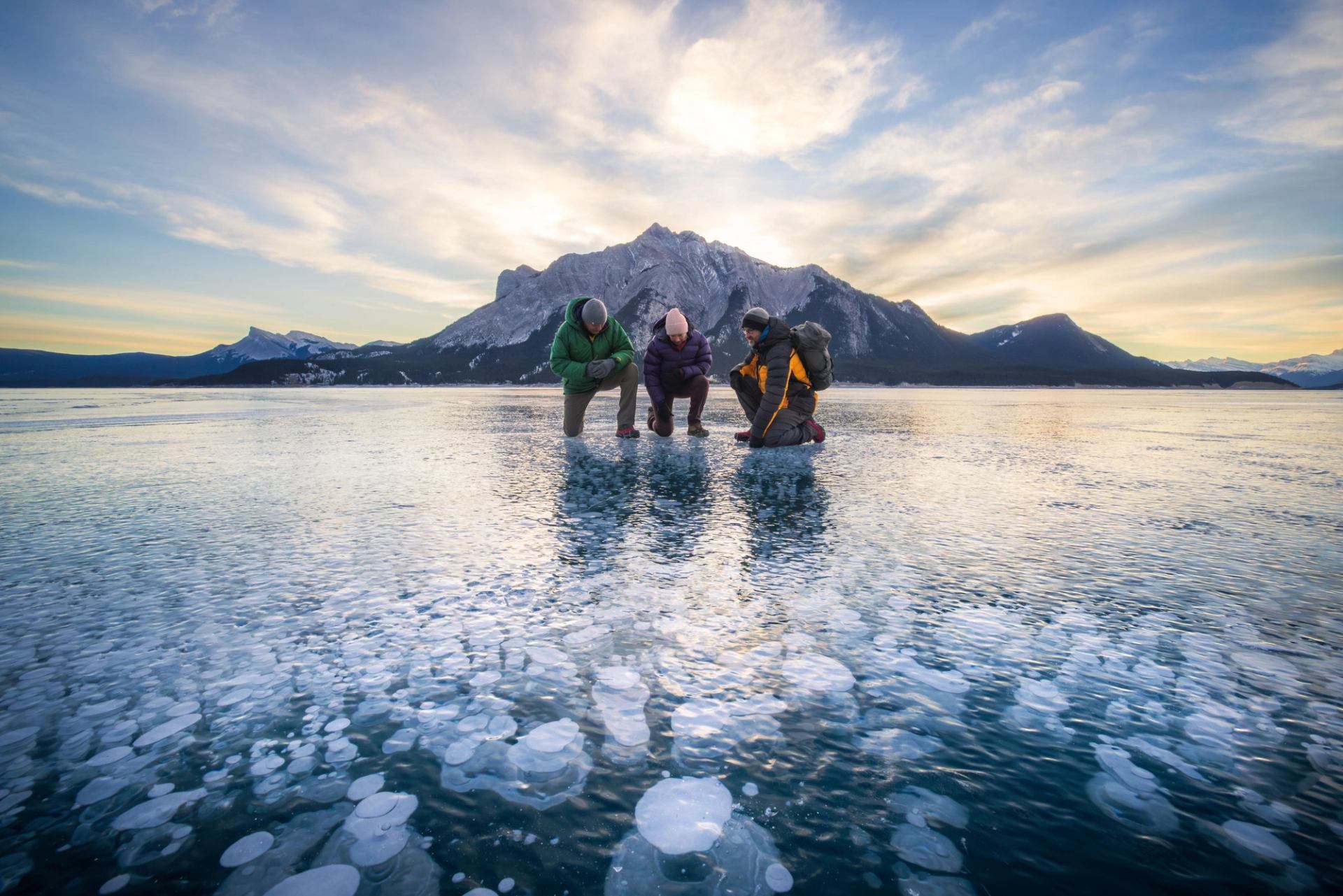
“I really didn’t anticipate that it would be this beautiful.” That’s the impression artist David Popa was left with after spending nearly 2 weeks immersed in the wild and wintry landscapes near Nordegg, Alberta.
Popa is an American artist based in Finland. He creates massive and realistic portraits in otherworldly locations using natural materials. Each piece is painstakingly created with charcoal and chalk (calcium carbonate), plus water sourced from nearby. The artwork is ephemeral, lasting for days or mere hours before dissolving back into the elements.
His earthly canvases have included ice floats and islets in Finland, the island of Crete in Greece, a desert in Saudia Arabia, rocky terrain in Utah, a French vineyard, and Norwegian islands. And now, Abraham Lake and Cline River Canyon in Alberta's David Thompson Country are the latest additions to his works.