The Science Behind Alberta's Most Awe-Inspiring Winter Experiences

Reading time: 7 minutes

From intricate ice crystals to vast mountain ranges, Alberta's winter landscapes inspire awe. Research suggests these encounters and moments of wonder offer multiple health benefits.

  • Witness distant galaxies in an acclaimed international dark sky park.
  • Join guided excursions that reveal winter's wonders in new ways.
  • Discover how winter experiences in Alberta can boost well-being.

Some sights are so striking they make you pause and take them in. While Alberta's landscapes are impressive in any season, winter delivers a distinct kind of magic. Think mountains rising above snow-draped forests, mysterious animal tracks in fresh snow and thousands of stars stretching across a velvet sky.

Whether it's a grand landscape or a small detail, these moments of discovery can spark an emotion psychologists call awe. Research suggests experiencing awe can benefit our well-being and change how we relate to the world.

Vast views like this can shrink everyday worries down to size. It’s the shift in perspective researchers point to when they talk about the benefits of awe.

What is awe?

Awe isn't simply admiring a spectacular landscape. It's a distinct emotion that occurs when we encounter something so extraordinary that it challenges our understanding of the world.

Travel offers an opportunity to step outside familiar routines and see the world differently. Exploring somewhere new, particularly a place with landscapes as expansive as Alberta's, can create the conditions for those moments of awe. When we recognize we're part of something much bigger than ourselves, everyday concerns take a back seat

Dr. Holli-Anne Passmore, an associate professor at Concordia University of Edmonton, defines awe by what it does to your sense of scale.

“Awe is an emotion evoked by something of such immensity that you can’t quite get your head around,” she says. “It evokes something called a ‘sense of small self,’ which has two aspects to it. It’s feeling small and insignificant, while at the same time feeling connected to a greater whole.”

Why a little awe is good for us

Awe is more than a feeling of amazement. Researchers have been investigating its effects on our brains, behaviour and physical well-being, and the findings are fascinating.

In a 2015 study, awe showed the strongest link, among seven positive emotions, to lower levels of interleukin-6, a marker of inflammation.

Other research has examined what happens when people experience awe in the presence of something vast, such as the immense scale of the Canadian Rockies or Alberta’s wild skies at night. Researchers have found that awe can encourage generosity, ethical decision-making and helping behaviour. One experiment found that people who stood among towering trees were more likely to help others afterwards.

Awe promotes curiosity, a pull to explore and understand the world, and leaves people feeling more connected to others and more inclined to help them. During a winter trip to Alberta, that curiosity might lead you to explore beyond the familiar sights, digging deeper into the places you're visiting and connecting with the people who call Alberta home.

Awe is even better shared. Research suggests the emotion leaves people feeling more connected to those around them, making a winter outing a great way to bond.

Why winter is the perfect time to find awe in Alberta

Winter brings its own kind of spectacle to Alberta. Snow-laden evergreens, frozen waterfalls and intricate patterns trapped beneath lake ice give the landscape an entirely different character. Look a little closer and there's even more to discover.

Joel Hagen, a master interpreter with Great Divide Nature Interpretation in Banff National Park, says it's not unusual to come across a fresh set of animal tracks every few minutes on a guided winter excursion.

"The snow is such a great canvas, because it tells you what's been happening," he says. On tours, he’s spotted tracks from some of Alberta’s most reclusive residents, including wolverines, porcupines, flying squirrels and lynx.

Hoar frost is another winter wonder. Formed when moisture freezes on exposed surfaces, it coats trees, branches and snow with intricate ice crystals.

“There are days when every inch of the snow surface is covered with hoar frost crystals," Hagen says. “They can be a couple of centimetres in size and glisten like a gajillion diamonds.”

For first-time visitors to Banff and Lake Louise, the sheer amount of snow can be a highlight in itself. “Winter is the real deal here. The snow is deep and hanging on the trees as if you’re in a Christmas card,” says Hagen.

On clear days, Alberta's famously blue skies add to the appeal. The province is Canada's sunniest, and winter sunshine gives a sense of freedom, says Dr. Passmore.

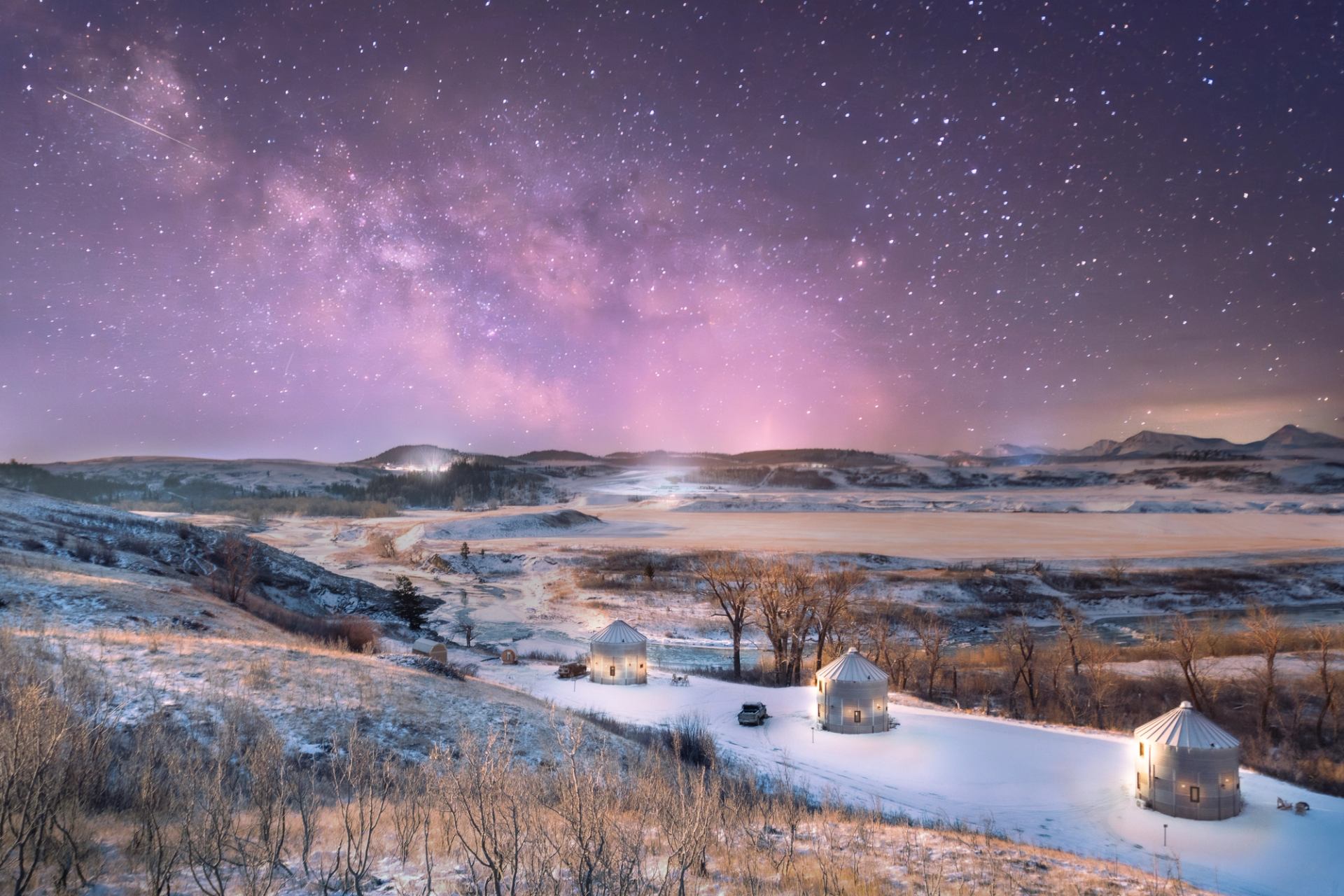
When the sun sets on a bluebird winter day, the show isn’t over. Alberta’s Foothills can deliver night skies every bit as dazzling as the mountain parks.

Alberta’s wild skies impart a sense of awe

Winter in Alberta also brings longer nights and excellent opportunities for stargazing. Away from city lights, the Milky Way spills across the sky while the Northern Lights may flicker and dance overhead.

Keith Robinson, president and co-founder of Dark Sky Guides, takes visitors into Waterton Lakes National Park to explore its star-filled night skies. Depending on conditions, they may also spot the aurora borealis.

“We help people discover a way to connect with the park that resonates with every individual. For some, it’s the first time they've ever seen the Milky Way or the northern lights,” he says. “It leaves people awestruck and speechless at times.”

“That allows them to then focus more on being in the moment, to paying attention,” says Robinson. “It's looking up at the night sky. It's losing yourself amongst the hundreds and thousands of stars overhead and the Milky Way running across the sky.”

Starry night sky above a forest of spruce trees.
Jasper National Park is the second-largest dark-sky preserve in the world.

Guides provide a deeper connection

A spectacular landscape can stop you in your tracks. But understanding what you’re looking at can make the experience even more meaningful.

That’s where local guides come in. They know the terrain, the wildlife and the stories behind Alberta’s prime locations. More importantly, they know where to look.

Hagen agrees that understanding adds an awe-inspiring dimension to the experience.

“It's so much more meaningful if people can not only see but understand the beauty,” he says.

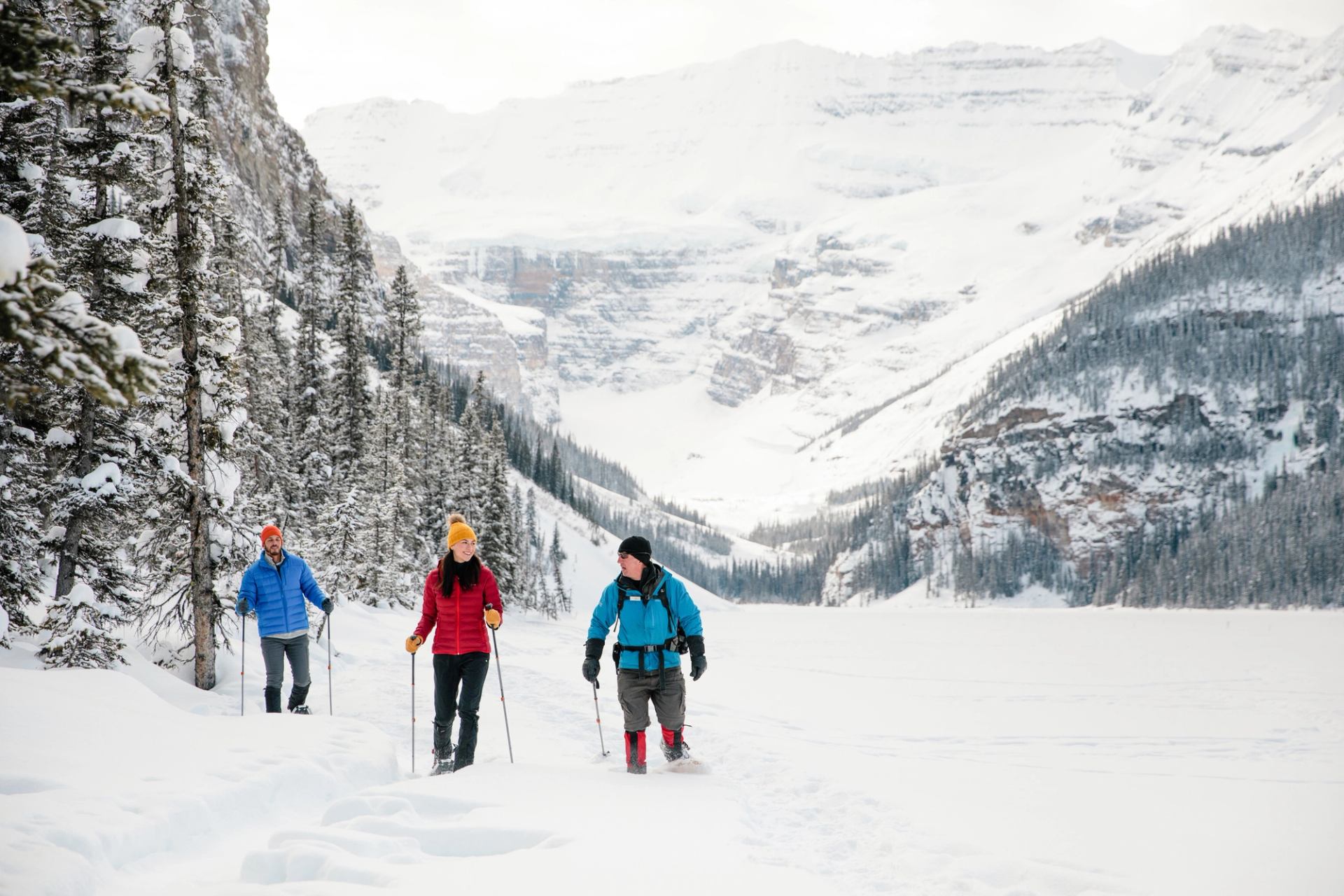
Travellers dressed in bright winter gear, snowshoe at the edge of an alpine forest with a snow-covered mountain in the background.
With a guide leading the way, a winter walk becomes a lesson in reading the landscape, from what the snow reveals about who’s passed through to how plants and animals make it through the cold.

7 Awe-inspiring winter adventures to try

Nobody needs to be an expert to experience awe.

“Part of what is great about awe is it hits you over the head and says, ‘Here I am,’ and you don’t have to have skills or training,” says Dr. Jennifer Stellar, Associate Professor, University of Toronto.

“It’s mostly about getting yourself into that space, the physical location.”

Alberta has no shortage of ways to experience awe. Here are some of the best things to do in Alberta in winter to tap into the benefits of this powerful emotion.

1. Walk on a frozen lake overtop ice bubbles

Abraham Lake's frozen methane bubbles suspended beneath clear blue ice are a signature Alberta winter natural wonder. The lake’s shifting ice also produces fascinating cracks and patterns. Join Canadian Rockies Escapes to safely explore the formations and learn the science behind them.

2. Take a different view of the Rockies from above

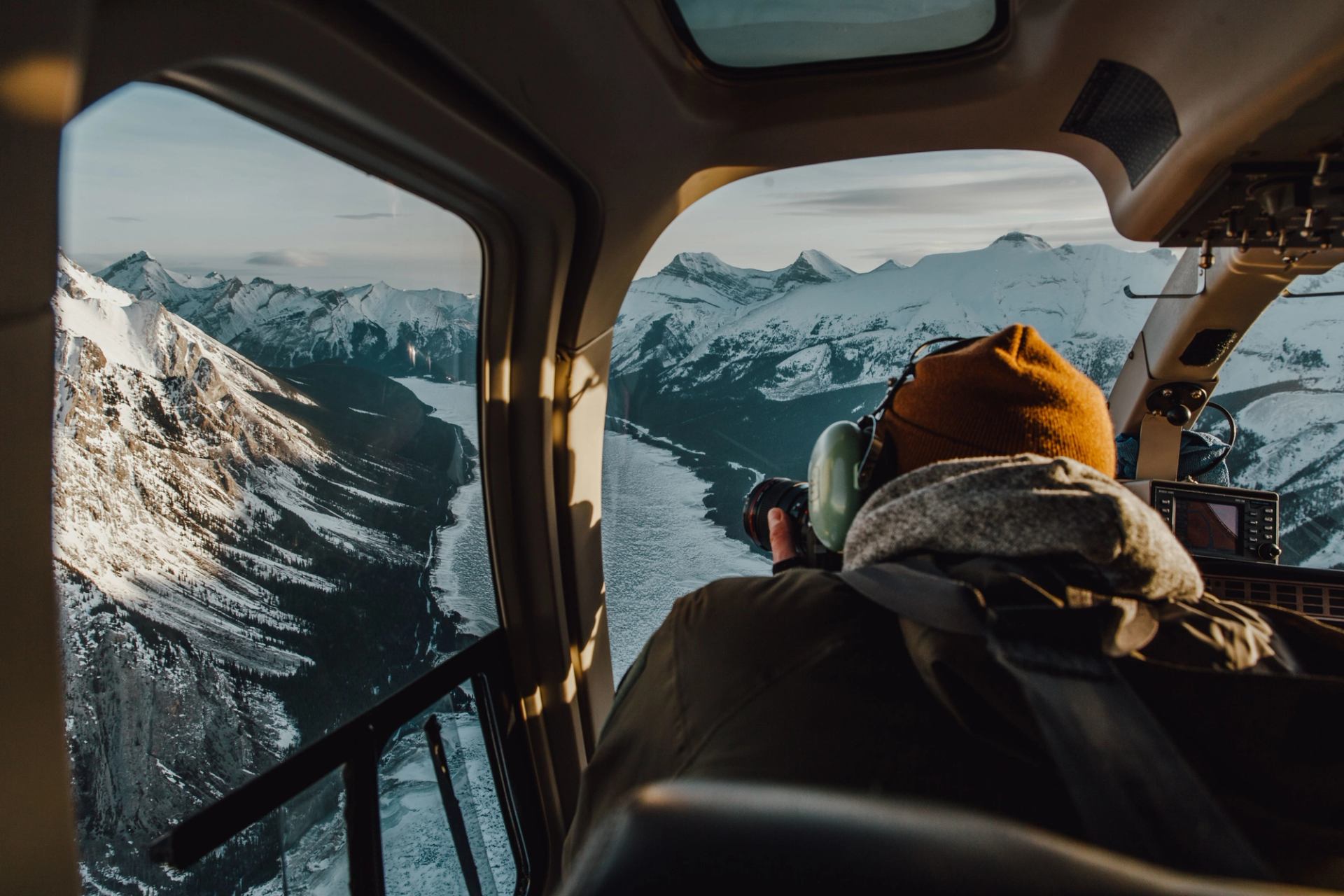
The scale of the Canadian Rockies really hits home from the air. Take a helicopter flight with Rockies Heli Canada over a sea of snow-covered peaks, glaciers and crystallized valleys. For a closer look, add a heli-snowshoe adventure and step out into the mountain wilderness. It's a perspective few get to experience on foot.

For some guests, a night out with Dark Sky Guides is their first time seeing the Milky Way. Guide Keith Robinson says that wonder helps people slow down, pay attention and be fully present in the moment.

3. Explore Waterton’s Dark Sky Preserve after dark

Waterton Lakes National Park takes on another dimension after dark. Dark Sky Guides offers nighttime tours to discover distant galaxies, star clusters and constellations. On a clear night, thousands of stars can appear overhead. With the possibility of northern lights, plus elk bugling in the distance, it’s a night to remember.

4. Follow the tracks on a guided snowshoe tour

Strap on snowshoes and explore the forests around Lake Louise with Great Divide Nature Interpretation, decoding the clues wildlife leaves behind. Discover who's been roaming the forest, where they’ve been heading and how animals survive winter in the Canadian Rockies.

5. Learn the land's stories on an Indigenous-led winter walk

A walk with Cree guide Brenda Holder of Mahikan Trails provides an immersive way to read the landscape. Learn how Indigenous communities have used the plants, trees and shrubs for food, medicine and fire-starting. Discovering the many uses of an ordinary-looking plant, and the generations of knowledge behind it, can change how visitors experience this landscape.

The Métis used the stars to navigate and as a clock and calendar, guiding when to plant, hunt and work the land. A night at Métis Crossing is a chance to see the sky through that lens.

6. Sleep beneath the stars at Métis Crossing

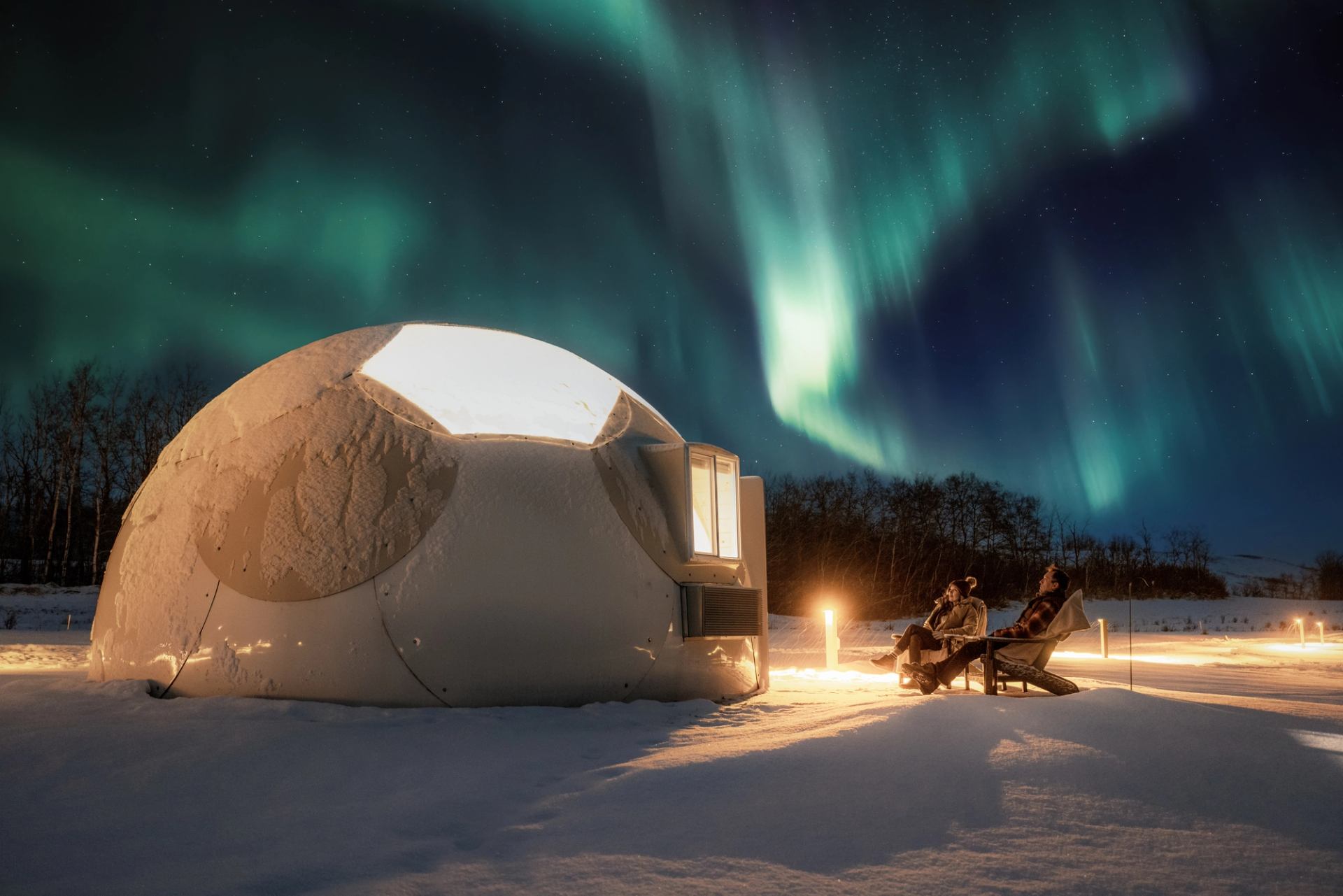
Sky Watching Domes at Métis Crossing put the night sky centre stage. Their transparent ceilings let you watch the stars from bed, with the northern lights sometimes making an appearance. During daylight, join a snowshoe tour or greet bison in the wildlife park.

7. Discover a frozen canyon

Follow a frozen creek between towering limestone walls at Grotto Canyon near Canmore. Along the way, look for frozen waterfalls and ancient Indigenous pictographs. Discover Banff Tours and Bow Valley Canyon Tours are among the local outfitters offering guided ice walks, with equipment and interpretation to explore the canyons safely.

Before heading out: Tips for winter adventuring in Alberta

A little preparation goes a long way when exploring Alberta in winter.

  1. Dress for the conditions: Wear warm layers, insulated footwear, gloves and a hat.
  2. Pack extras: Bring spare clothing, water and snacks in case your outing takes longer than expected.
  3. Check conditions: Look at the weather forecast and trail conditions before heading out.
  4. Know when to hire a guide: For activities involving frozen lakes, canyons or backcountry terrain, book with an experienced operator who knows the area and can help you navigate changing conditions.