5 Essential Tips for Skating on Alberta's Stunning Wild Ice

Reading time: 5 minutes

Chasing and finding wild ice is a liberating, freeing and awesome escape, but knowledge, preparation and planning are key for getting home safely.

  • Always skate with a companion.
  • Start hunting for wild ice in mid-November for the early season.
  • Ice should be 20 cm (8 in) thick to skate safely.
See related articles

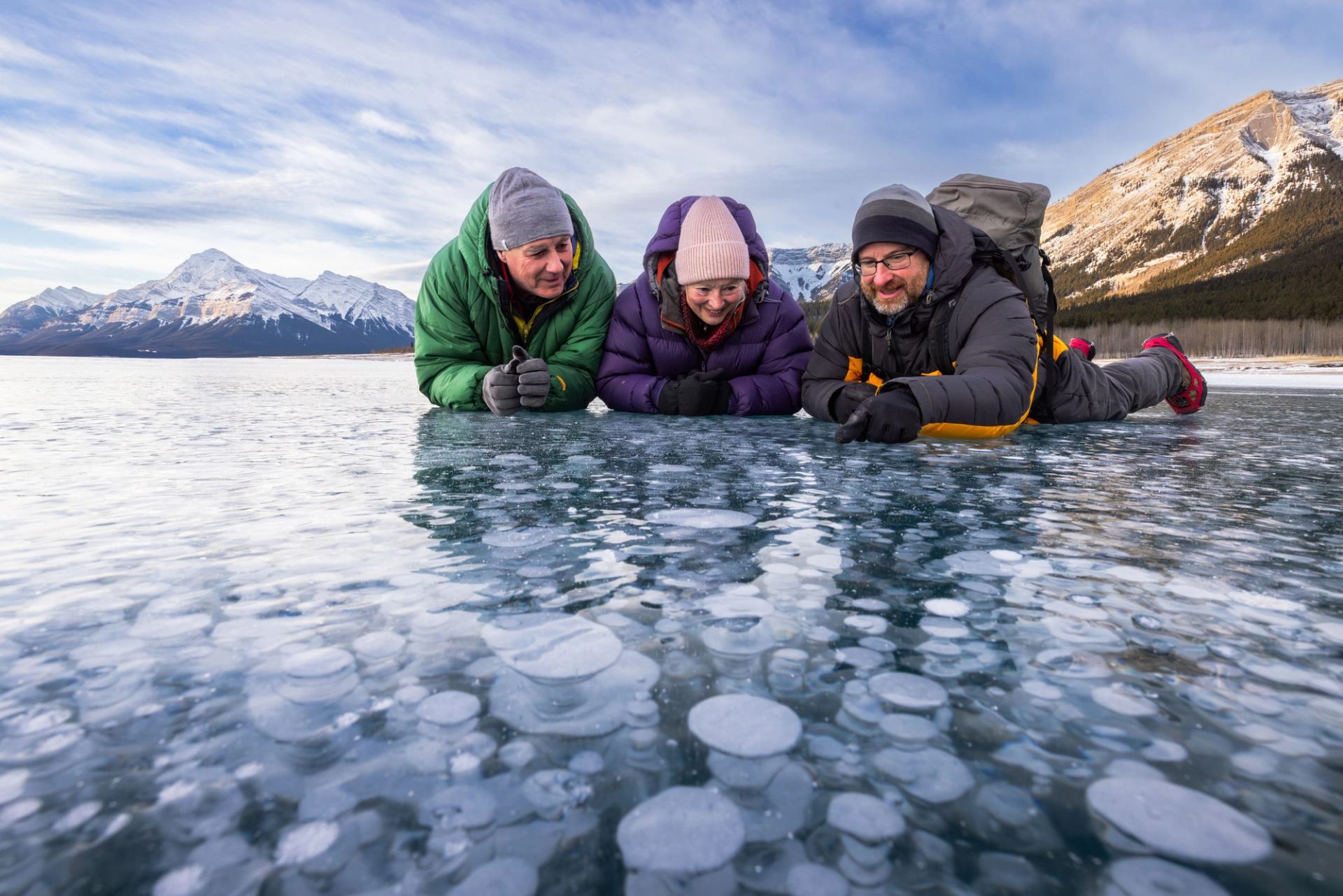
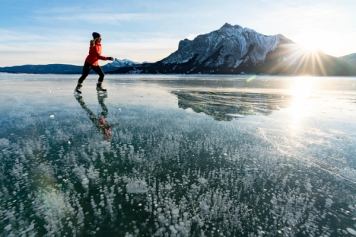
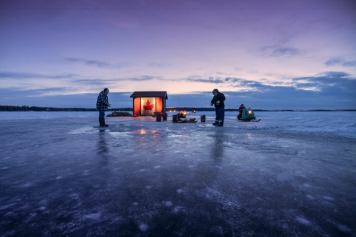
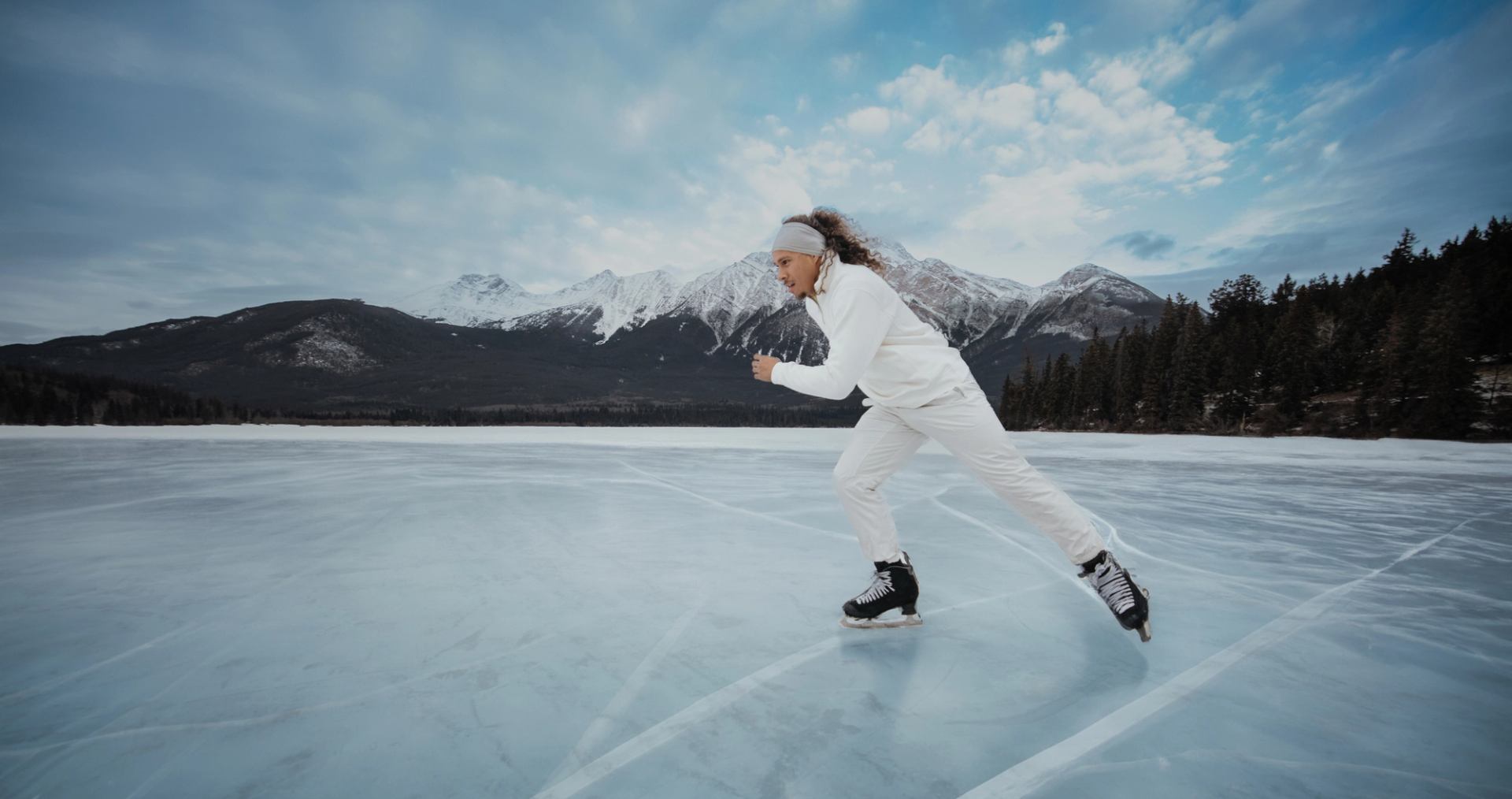
Embarking on a wild ice adventure under Alberta’s wide blue sky is the ultimate free-spirited escape. “Wild ice” refers to a frozen body of water in a remote area, where you're more likely to encounter wildlife than other people. Whether you’re ice skating, ice fishing, cross-country skiing or snowshoeing, you’re sure to discover your wild side when you’re surrounded by the towering Rocky Mountains.

However, knowledge, preparation and planning are key to the main goal of every escape: coming home safe with an amazing story to tell.

1. Always skate with a buddy

Brian Webster, Parks Canada’s Visitor Safety Manager for Banff, Yoho and Kootenay National Parks, has witnessed firsthand what can happen when safety isn’t top of mind for adventurers. One of the main jobs for his Visitor Safety Team is to help people who get into trouble when they're in the backcountry (the backcountry refers to any place that can’t be reached by a vehicle). He and his teammates respond to everything from a hiker who has twisted their knee on a trail to a climber or a skier who is stuck in a very remote part of the park.

When it comes to wild ice in Alberta, Webster says, first of all, it’s important to never, ever skate alone. That other person is a literal lifeline should something go wrong.
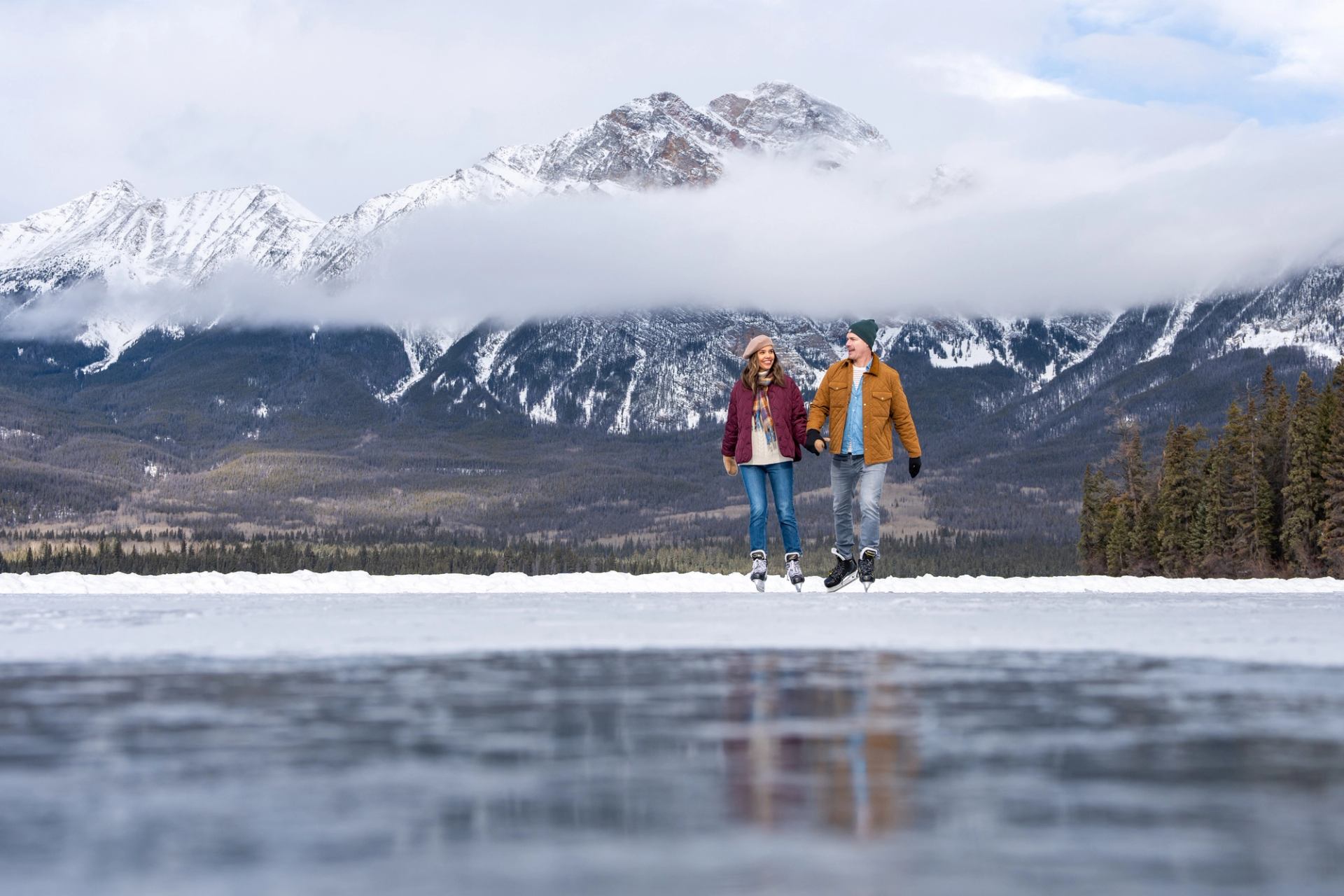
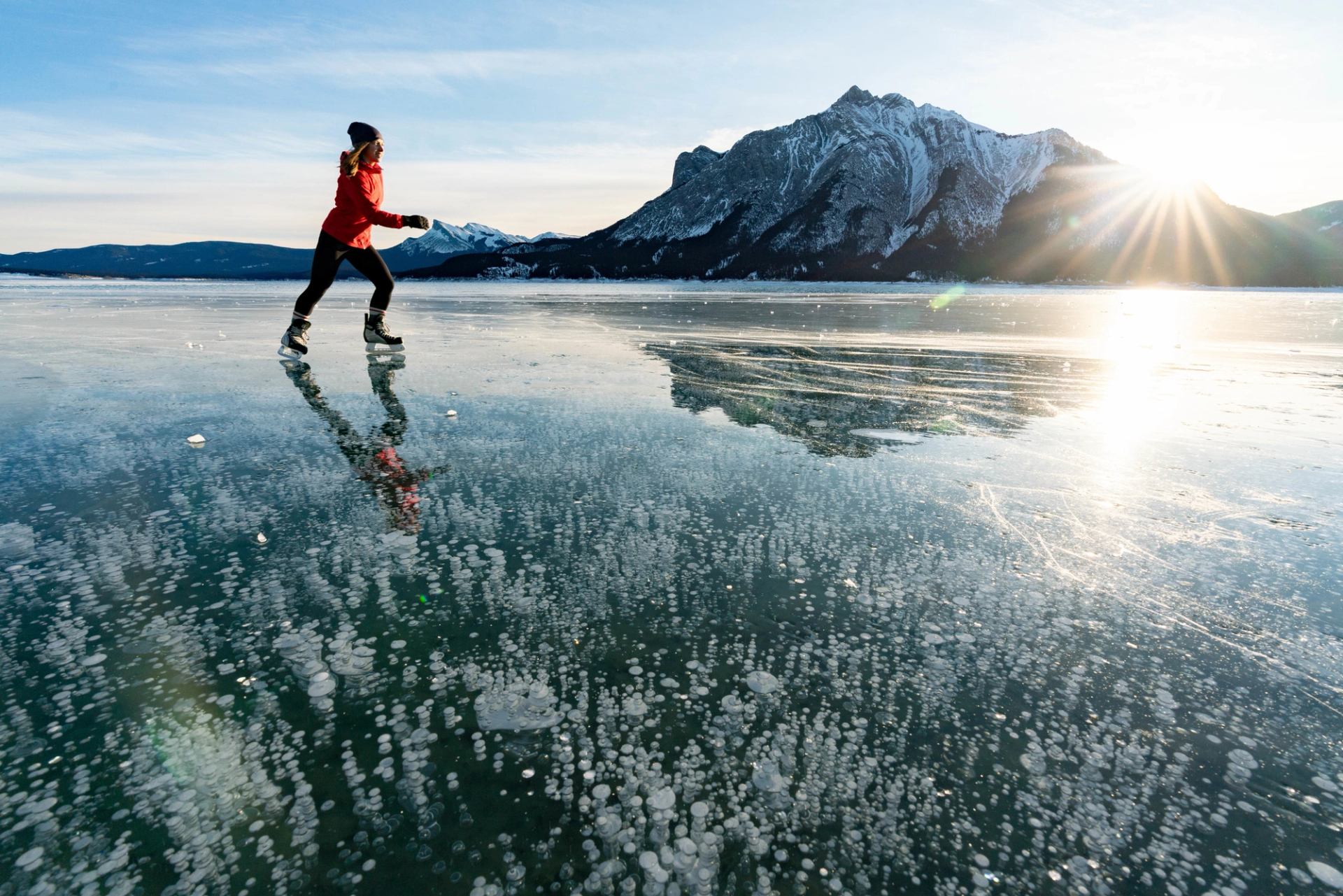
Parks Canada Visitor Safety Manager, Brian Webster, recommends always going with a companion when wild ice skating.

2. Know when and where to go

The time to start hunting for wild ice is generally mid- to late-November for the “early season,” Webster says, when the ponds and smaller bodies of water freeze, such as Vermilion Lakes or Johnson Lake. There’s then a second opportunity when the bigger lakes are ready before New Year’s, such as Lake Minnewanka, Peyto Lake and Abraham Lake in Banff National Park, or Spray Lakes in Kananaskis. As winter progresses and snow builds up, it’s rare for lakes or larger bodies of water to provide good skating opportunities from January onwards.

“If you have a good early freeze before it snows, wild ice skating can be a fantastic activity,” Webster says.

“It is quite beautiful, but wild ice skating has its associated hazards. But if you're smart about it and take the appropriate precautions, you can reduce the risks to a very, very low level,” Webster says.

If you miss the sweet spot for wild ice season, there are still plenty of stunning locations to skate outdoors across the province during winter, including:

  • Edmonton’s Victoria Park IceWay and Rundle Park IceWay each wind through urban forests, allowing for an enchanting skate.
  • Likewise, Calgary’s ice trails through Bowness Park and North Glenmore Park provide a chance for both speed and serenity on skates.
  • In Canmore, try a leisurely skate at the Pond Natural Ice Surface (on 7 Avenue at Mallard Alley)or the Canmore Nordic Centre.
  • Lake Louise offers perhaps the most iconic ice skating opportunity in Canada with the Canadian Rockies and Victoria Glacier as your backdrop. Rent skates from Chateau Ski & Snow or bring your own and enjoy the moment.
Wild ice skating season varies depending on the weather each year, but generally goes from mid- to late-November until early January.

3. Measure ice thickness

The most serious hazard of wild ice is if the ice isn't thick enough to support the weight of skaters. Parks Canada uses the Canadian Red Cross standard for ice safety, which says that ice should be 20 centimetres (8 in) thick.

“Twenty centimeters is more than enough to support a skater or a group of skaters,” Webster says. It’s also safe for cross-country skiing, snowshoeing and ice fishing.

Ice always freezes in an uneven fashion. It may be measured at 20 centimetres thick in one area, but potentially 50 metres (164 ft) away it could be less so.

“That 20 centimetres provides a wide enough buffer that if the ice gets thinner as you move in a different direction, it's still very likely going to be strong enough and thick enough to support your weight,” Webster says.

One way to measure the thickness of the ice is to “be observant,” Webster says.

“Usually there are going to be cracks in the ice that have frozen. Where that crack has happened, you can see the ice profile and estimate how thick it is. And that's a good thing to do, just always be aware as you move around and try to estimate how thick the ice is.”

Another method of measuring ice thickness is to bring an ice screw, which are available at sport and outdoor recreation stores. The screw continuously lifts out a plug of ice until water is reached so it’s easy to gauge thickness.

It’s also important to properly pick a skating location. Ponds and smaller bodies of water are likely going to be safer as they are not as deep and will freeze quicker than a larger water body.

On a larger lake, avoid areas where water may be flowing underneath, such as inlets and outlets, and anywhere that isn’t fully frozen.

Be sure to measure the ice thickness before skating - or even better, explore with a knowledgeable guide.

4. Bring safety devices

Webster highly recommends carrying a pair of ice picks that are easily accessible in pockets, should the worst happen.

“This can be very, very serious,” Webster says. “You're going to get wet, hypothermic and cold, and it might be very difficult to get out because the ice surrounding you is very slippery and it's obviously not very strong. As you try to climb out on the ice, the ice might just continue breaking.”

Due to ice instability, others trying to assist may not be able to get close enough. A pair of ice picks provides traction, helps grab onto the surface and allows for clawing out or towards more stable ice.

Webster also recommends bringing a 15-metre (49-ft) long rope pre-tied with a loop at the end to assist in pulling someone out of icy water. Hypothermia will cause a person’s muscles to stop reacting in seconds and is incredibly dangerous. Bring plenty of blankets to dry them off as well as extra sets of clothes to change into.

With regards to wearing personal flotation devices and dry suits, these are also good ideas, but again, Webster stresses that prevention is key.

“The consequences are quite high if you do fall in,” Webster says. “Don't just go out there blindly because other people are out there.”

Close shot of a person's legs as they hold a safety rope while adventuring in the mountains.
Ice picks, rope and personal flotation devices are always good to have on hand should things go wrong, but prevention is key.

5. Know how to get help

If outside help is needed, the best thing to do is call 911. However, given the vastness of Alberta’s parks, sometimes there is no cell service. When heading into these types of areas, consider a wearable emergency satellite communication device. It will send an emergency SOS signal via satellite technology directly to Webster and Parks Canada’s Visitor Safety Team.

Those new to Alberta may want to contact a guide for their wild ice experience, such as Canadian Rockies Escapes, which offers customizable adventures complete with a family-friendly feel.

A man outdoors in the winter holding a cell phone in one hand and a satellite communication device in the other.